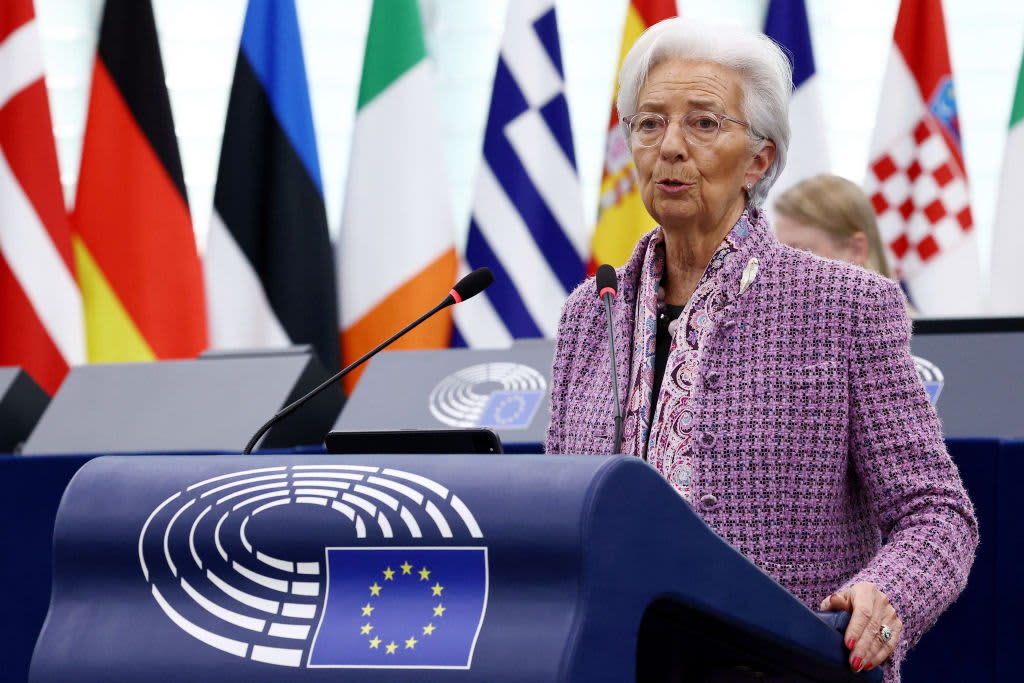
European Central Bank set for final rate reduction as looming tariffs and increased fiscal spending approach.
ECB Prepares for Its Last Interest Rate Cut Amid Rising Tariffs and Escalating Government Spending
Category Classification: Fund

ECB's Upcoming Rates Decision: A Tightrope Walk Amid Economic Turbulence
This Thursday, the European Central Bank (ECB) is poised to execute its second interest rate cut of the year, but mounting disagreements among policymakers foreshadow a turbulent meeting—especially in the face of tariff anxieties and the prospect of increased regional defense expenditure.
As of Wednesday, market expectations had fully absorbed a quarter-point reduction in the ECB's key rate for the March meeting, nudging it down to 2.5%, a considerable drop from its peak of 4% last summer. Analysts also anticipate the rate could fall to 2% by year’s end.
Inflation Trends and Economic Weakness: The Context for Easing
The past nine months have seen a rapid and significant easing of monetary policy, driven by consistently low euro zone headline inflation—hovering below 3%—and stagnating economic growth. Traditionally, the ECB’s Governing Council operates with near-unanimous decisions and provides clear directions to manage market projections.
However, the central bank is now approaching the contentious concept of a “neutral rate,” a level where monetary policy neither stimulates nor constrains economic activity. Discrepancies among policymakers persist regarding this threshold and whether rate reductions may still be necessary in light of ongoing low growth.
ECB President Christine Lagarde expressed in January that she believed this neutral rate range to be between 1.75% and 2.25%, a slight decrease from her previous estimate. Nonetheless, more definitive guidance from the ECB has yet to surface.
Internal Divisions Growing Among Policymakers
In a recent note, analysts at Bank of America Global Research projected that, following this week’s assembly, internal disputes among policymakers would intensify. They remarked, “This is the last ‘easy’ rate cut in our views as disagreements grow.” Yet, they reaffirmed their expectations for the ECB to reduce rates to 1.5% by September.
Goldman Sachs analysts also observed that discussions among ECB policymakers have become more pronounced, predicting a focus on whether current financial conditions—including bank lending and business performance—still lean towards restrictions.
Global Factors and Defense Spending: Clouds on the Horizon
The outlook for the ECB is further clouded by a myriad of factors stirring both markets and economic stability. All eyes will be on the ECB’s staff macroeconomic forecasts on inflation and growth set to be revealed on Thursday, though skepticism about their accuracy remains prevalent.
The U.S. has levied tariffs on its primary trading partners, projected to impact global sectors like automotive manufacturing; however, these tariffs could still see reductions. President Donald Trump has suggested the European Union may be next in line for increased duties, yet the chance for negotiations also lingers. The ramifications are unclear—tariffs could slow trade and hinder economic activity while also pressuring the euro and raising import costs.
Simultaneously, European nations are ramping up defense spending due to fraying relations with the U.S. over the situation in Ukraine.
Potential Fiscal Expansions and Market Reactions
Lagarde may face inquiries about the ramifications of a newly announced coalition deal in Germany, aimed at reforming the nation's debt rules. While the specifics remain unfinalized, the arrangement could unlock up to one trillion euros for defense and infrastructure projects—fueling a notable surge in the euro’s value following the announcement.
Rabobank analysts noted that the euro’s increase is “partly due to expectations that room for further ECB rate cuts will be more confined,” suggesting that reforms and heightened spending could potentially uplift economic growth.
The Uncertain Path Ahead
Despite the prevailing uncertainty, some analysts do not foresee substantial changes to the ECB's guidance during Thursday’s meeting. In January, the focus remained on inflation converging towards its target while emphasizing the restrictiveness of current monetary policies—a stance they will likely maintain.
Market watchers will be particularly interested in whether the ECB adjusts its stance on policy as “restrictive” and if indications of a potential rate hold emerge for the April meeting.
Citi analysts suggested that “due to the unusual uncertainty stemming from ongoing political and geopolitical developments,” the Governing Council may aim to enhance policy flexibility. They anticipate this might lead to a more cautious communication strategy without implying that an easing pause is imminent. Although shifting geopolitics may eventually invoke reflationary fiscal measures, they argue that for the moment, monetary easing is more likely to remain on the table.